Amazon vs Flipkart for Sellers: Which Platform Wins for Your Category?
Amazon Seller Strategy

Amazon vs Flipkart for Sellers: Which Platform Wins for Your Category?

Written by Naveen Kumar Nutheti
28 May, 2026|10 min read
Share

Choosing between Amazon vs Flipkart for sellers is the first real decision every Indian e-commerce business makes. Around 300 million Indians shopped online last year (Bain & Company, 2026). Deloitte projects the market will reach $250 billion by 2030 (Deloitte, 2026). The two platforms split that opportunity unevenly across categories, fees, and buyer profiles. This post compares fee structures, audience and fulfilment differences, and gives a category-by-category verdict. By the end, you will know exactly where to list first.

Key Takeaways
Flipkart holds roughly 48% of Indian e-commerce GMV, Amazon 30–35% — but category strength differs sharply between them.
Both platforms offer zero commission on products under ₹1,000 (with Flipkart removing the cap entirely for fashion), so your real cost battle is shipping, closing, and collection fees.
Flipkart dominates smartphones, appliances, and fashion; Amazon leads beauty, personal care, FMCG, and books.
Amazon's FBA and Flipkart's FBF work differently — your fulfilment choice changes fees, Buy Box odds, and delivery speed.
The smartest sellers don't choose one platform. They lead with the category winner and expand to the second within 90 days.

Fee Structure: Amazon vs Flipkart Side by Side

Start with the headline change. Flipkart introduced its Zero Commission Model in November 2025, removing commission on all products priced below ₹1,000 (Flipkart, 2025). The company says this cuts a seller's cost of doing business by up to 30%.
Amazon answered in March 2026. It expanded zero referral fees to over 12.5 crore products under ₹1,000, across 1,800+ categories (Amazon India, 2026).
Amazon claims total selling fee savings of up to 70% for eligible products. Easy Ship fees also dropped by more than 20% for items priced under ₹300.
Above ₹1,000, percentage fees return on both platforms. Amazon referral fee rates historically ranged from 2% to 16% depending on category (Outlook Business, 2025).
Flipkart fashion is now the exception. On 8 July 2026, Flipkart made its entire fashion category zero commission, scrapping the old ₹1,000 cap (Business Standard, 2026). That covers apparel, footwear, jewellery, and accessories at every price point.
In our fee audits at EcomBuddha, Flipkart commissions span a wide band on non-fashion goods. Rates run from roughly 2% on mobiles to 20%+ on categories such as home and décor.
Commission is only one line on your settlement report. Both platforms also charge a fixed or closing fee, shipping or weight handling fees, and 18% GST on all charges.
Flipkart adds a collection fee on every order, while Amazon builds payment costs into its closing fee. In our settlement audits, sellers who ignore these smaller lines misprice their products by 5–8%.
Here is the practical takeaway from amazon seller fees 2025 changes. Amazon also cut referral fees by 4% to 9.5% on categories above ₹1,000 (Amazon India, 2026). The reductions cover apparel, appliances, footwear, grocery, and personal care.
If your average selling price sits between ₹1,000 and ₹2,000, model both rate cards before listing. The cheaper platform flips by category.

What Zero Referral Fees Actually Mean for Your Margins

Zero-fee headlines hide a detail that decides your profit. Removing the amazon referral fee or Flipkart commission does not make selling free. Fixed fees, shipping, and returns still apply on every single order.
Take a ₹299 product as a worked example. Under the old structure, a seller paid commission starting at 2%, plus closing and shipping charges (Outlook Business, 2025).
Today the commission line reads zero on both platforms, yet shipping remains. Amazon's flat national shipping rate starts at ₹65 (Amazon India, 2025). On a ₹299 sale, that single line consumes over 20% of your revenue.
Returns are the silent margin killer in this price band. Flipkart paired its zero commission move with reduced return fees, which matters enormously for fashion and footwear (Flipkart, 2025).
Based on our work with Amazon India sellers, return-heavy categories lose 8–15% of gross revenue to reverse logistics. That loss lands before any platform fee is even counted.
Run this three-line check before celebrating zero commission. Calculate your net settlement per unit after fixed fee, shipping, and GST. Multiply by your realistic return rate, not your hoped-for one.
Then compare that final number across both platforms. A zero-commission listing with heavy returns still loses to a 5% commission listing that customers keep.

Audience, Traffic and Fulfilment Differences

The two customer bases are not interchangeable. Flipkart reaches an estimated 220–240 million monthly active users (ICICI Securities, 2026). Its buyer base skews toward value-led shoppers in Tier 2 and Tier 3 cities.
Amazon has historically indexed toward premium, urban customers (MerchantSpring, 2025). Neither profile is better — they simply buy different products at different price points.
Seller competition also differs in scale. Amazon India's seller base has grown to nearly 1.7 million (Amazon India, 2026). Flipkart reports over 1.4 million sellers including its Shopsy platform (Flipkart, 2025).
More sellers means deeper competition per keyword, but also more mature advertising and analytics tools.
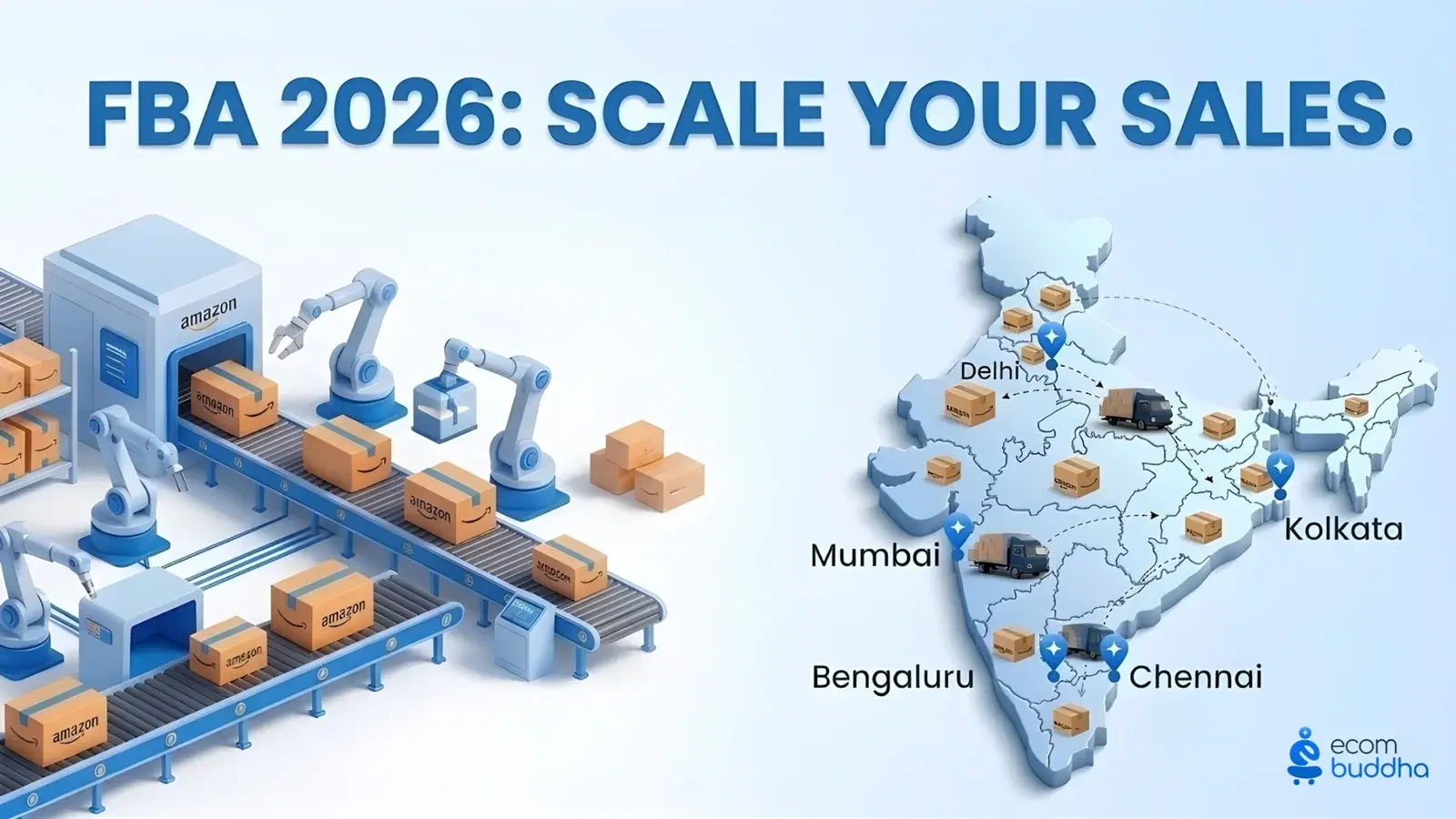
Fulfilment is where the platforms truly diverge. On Amazon you choose between FBA, Easy Ship, and Self Ship. The amazon fba vs fbm decision changes your fees, Prime badge eligibility, and delivery speed.
Flipkart offers FBF (Flipkart Fulfilment) through Ekart, its in-house logistics arm, plus a Non-FBF pickup model.
In our experience onboarding brands like Havells and Nippon Paint, fulfilment choice moves conversion more than pricing tweaks do. A Prime badge or Flipkart Assured tag lifts click-through and buy-box share on both platforms.
Delivery speed promises also reduce cancellations on cash-on-delivery orders, which remain common outside metros. Factor warehouse storage costs into your comparison, because both programs charge for space, handling, and long-ageing inventory.
Let Your Product Page Do The Selling
Try EcomBuddha

Category-by-Category Verdict: Where Each Platform Wins

Category strength is the sharpest difference between these platforms. Flipkart commands a 63–64% share in smartphones, appliances, and electronics (ICICI Securities, 2026). Amazon holds a 50–60% share across beauty, personal care, FMCG, and general merchandise in the same analysis.
Use this as your starting map, not your final answer. Demand within a category still varies by price band and brand strength.
Electronics, smartphones and large appliances: Flipkart first. In our client data, Big Billion Days demand and EMI-led buyers convert high-ticket electronics at scale. Accessories under ₹1,000 also ride the zero-commission structure profitably here.
List on Amazon second to capture the premium urban segment.
Beauty, personal care, grocery and FMCG: Amazon first. Repeat-purchase behaviour and subscription habits favour Amazon's customer base.
The best selling items on amazon india in these categories are replenishable, low-weight products. They fit neatly under the new zero-fee threshold.
Fashion, footwear and sarees: Flipkart first, and the case just got stronger. Since 8 July 2026, Flipkart charges zero commission on all fashion, scrapping the old ₹1,000 cap (Business Standard, 2026). Flipkart's fashion dominance through Myntra-adjacent audiences makes this a strong lead category.
Premium apparel, footwear, and jewellery now keep full margin on Flipkart. Our client audits still show fashion and footwear return rates run highest of any category.
Price above your return-adjusted breakeven, not above bare fees.
Books, media and niche hobby products: Amazon first. Its catalogue depth and search behaviour reward long-tail listings.
Home, kitchen and décor: Split verdict. Sub-₹1,000 items now carry zero commission on both platforms, so test both and let 60 days of data decide.

Amazon vs Flipkart for Sellers: 4 Questions to Decide

Strip the platform decision down to four questions. Each one narrows your true cost to sell on amazon versus Flipkart for your specific catalogue.
Question 1: What is your average selling price? Under ₹1,000, both platforms waive commission, so compare fixed fees and shipping only. Above ₹1,000, pull both rate cards — unless you sell fashion, where Flipkart now charges zero commission at any price (Business Standard, 2026).
Question 2: Where does your category's demand live? Check the share data above, then verify with 15 minutes of manual search on both apps.
Count how many sellers with 1,000+ ratings compete for your exact product type. Ten or fewer signals room to enter, while fifty or more demands a differentiated offer.
Question 3: Can you fund fulfilment inventory? FBA and FBF both demand upfront stock placement and storage fees.
Sellers without that working capital should start with Easy Ship or Non-FBF pickup models. You can graduate to warehouse fulfilment once sales velocity justifies the storage cost.
Question 4: What is your realistic return rate? Fashion and footwear sellers should weight Flipkart's reduced return fees heavily (Flipkart, 2025). Low-return categories like books and packaged FMCG can prioritise pure traffic instead.
In our work with Amazon India sellers, the 90-day dual-platform plan outperforms single-platform launches. Lead with your category winner, stabilise operations, then replicate your top 20% of SKUs on the second platform.

Conclusion

Amazon vs Flipkart is not a loyalty question — it is a category and cost question. Flipkart's 48% market share and electronics dominance make it the default for high-ticket, value-led products (MerchantSpring, 2025). Amazon's strength in beauty, FMCG, and books rewards replenishable and long-tail catalogues.
With both platforms at zero commission under ₹1,000, fixed fees, fulfilment choice, and return rate now decide the winner. If you want a category-specific fee model before you list, talk to EcomBuddha. Our team maps both rate cards to your exact catalogue.

Frequently asked Questions

Naveen Kumar Nutheti

Naveen Kumar Nutheti is a seasoned e-commerce strategist with 12+ years of experience across India and the Middle East. He has scaled businesses past ₹1,000 Cr in annual revenue and consults brands including Godrej, Nippon Paint, Kohler, Havells, Taparia, and Birla Opus on e-commerce sales strategy and product listing optimisation. He is the founder of EcomBuddha, an AI-powered listing intelligence platform for Amazon India sellers.

© Digicom Buddha Tech pvt ltd. All rights reservedPrivacy PolicyTerms of Service